
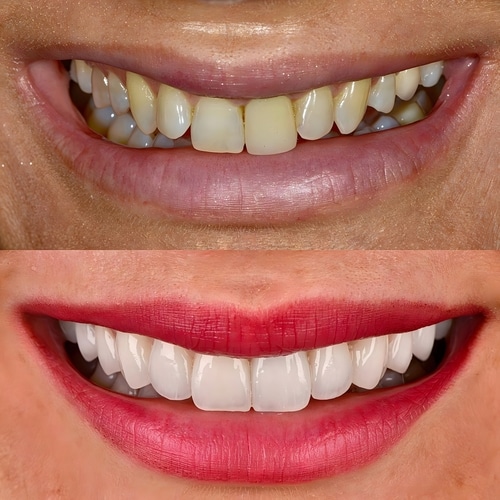
If you’ve been researching porcelain veneers, you’ve probably come across a lot of information about what the process looks like: the consultation, the preparation, the placement. Most accounts stop there, but there’s one part of the porcelain veneers process that rarely gets mentioned: replacement. Veneers are a permanent commitment, not a permanent solution. We remove some enamel during preparation, which is what gives veneers their natural, flush appearance and keeps them securely bonded for years. But that also means you can’t go back to unrestored teeth. As a result, when veneers eventually wear out, replacement isn’t optional; it’s necessary.
Most patients don’t know this going in. The ones who do know make better decisions, have better outcomes, and are never blindsided years later. Helping patients understand those realities before treatment has always been part of Dr. Paul Berger’s approach to odontología cosmética. For more than 36 years, he has believed that an informed patient is far more likely to have a successful veneer experience.
What the Porcelain Veneers Process Actually Looks Like
For patients interested in veneers, the journey begins with a cosmetic dentistry consultation. Dr. Berger evaluates your teeth, discusses your goals, and determines whether you’re a good candidate.
If veneers are the right fit, the next step is preparation. Dr. Berger removes a small, precise amount of enamel from the outer surface of each tooth in your smile line. This is a permanent change: once we remove enamel, the tooth will always need a restoration like veneers. But shaping the enamel is also a necessary change because it allows each porcelain veneer to sit flush and blend seamlessly with your surrounding teeth.
From there, we take impressions and send them to our dental lab, where technicians craft your custom porcelain veneers. In the meantime, you’ll wear temporaries to protect the prepared teeth and give you a preview of your new smile. When the final restorations are ready, Dr. Berger bonds them into place. The result is a natural-looking, durable, stain-resistant smile. Because Dr. Berger places only full porcelain veneers (treating every tooth in the smile line), patients benefit from a cohesive, uniform result and a material that closely mimics the light-reflecting properties of natural enamel.
Most patients leave that final appointment feeling like the process is complete. In one sense, it is. But there’s a stage that comes later. While replacement is sometimes mentioned in passing, the details that matter most are rarely discussed at the start.
The Step No One Talks About: Replacement
Porcelain veneers are incredibly durable, but they are not lifetime restorations. On average, they last 10 to 15 years, and some last much longer with excellent care. But eventually, things change. When they do, the veneers may need to be replaced.
This isn’t a sign that something went wrong. Because the original process involves removing enamel, the tooth will always need some form of restoration going forward. Replacement is simply the long-term continuation of that commitment. Knowing this upfront doesn’t change whether veneers are the right choice. For the right patient, they absolutely are, but it does change how you might think about them. Veneers aren’t a one-time purchase. They’re a long-term investment in your smile and confidence.
So what actually causes a veneer to need replacement? The most common reasons include:
 Chips or cracks: Biting hard objects or grinding and clenching (bruxism) can damage porcelain over time.
- Bond failure: The adhesive holding the veneer in place can degrade, causing the veneer to loosen or separate from the tooth.
- Decay: Cavities can develop along the margin of the veneer or on the underlying tooth. As a result, we likely need to remove the veneer for proper treatment.
- Gum recession: Receding gums can expose your tooth roots and show the edge of the veneer. This can affect how naturally it blends with neighboring teeth.
- Aesthetic updates: Some patients later decide they’d like to change the look of their smile. They may want a different shade, shape, or contour, which is a completely valid reason for veneer replacement. One detail that we mention to patients at the start of treatment is that porcelain can’t be whitened. If your natural teeth shift in color over the years, your veneers won’t change with them, which can eventually affect how well they match.
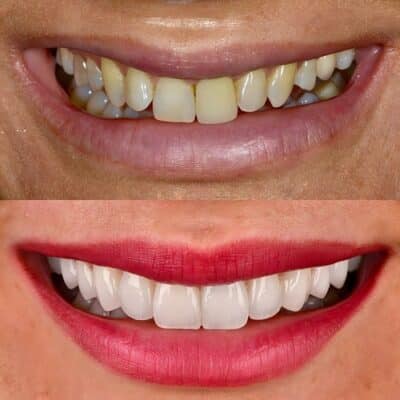 Chips or cracks: Biting hard objects or grinding and clenching (bruxism) can damage porcelain over time.
How To Make Your Veneers Last
The best way to help your veneers last is to understand what causes them to need replacement in the first place.
If you grind or clench your teeth, a custom night guard is non-negotiable. Bruxism is one of the fastest ways to fracture porcelain or stress the bond over time.
Flossing daily also matters more than most patients expect: keeping the gum tissue around your veneer margins clean and healthy helps prevent recession and decay, which are two of the most common reasons veneers need early replacement.
Beyond that, you should use a nonabrasive toothpaste to protect the porcelain surface, keep up with regular exams so Dr. Berger can monitor your margins and catch anything early, and break habits like biting your nails, chewing on pens, or using your teeth to open packaging. Porcelain is durable, but it wasn’t designed for all that.
Patients who stay consistent with these habits typically get 15 years or more from their veneers, and some get considerably longer.
Learn the Ins and Outs of the Veneers Process With Dr. Berger
The patients who do best with veneers are the ones who go in with clear eyes. They understand the transformation they’re getting and the long-term commitment it involves. When you know what you’re signing up for from the beginning, you can make informed choices and be confident in your care.
If you’re considering porcelain veneers and want to know whether you’re a good candidate, programar una consulta with us today. We’ll thoroughly explain every part of the veneers process, from your initial smile transformation to how your veneers may look and perform 10 to 20+ years from now.
